
Journal About Cloud & Network Technologies

Source: clatsopcountygensoc.com
Welcome to Cloud & Network Solutions Hub — a space where modern infrastructure meets practical, real-world IT solutions.
Here, we explore cloud computing, network architecture, and automation in a clear and accessible way. We share insights, tools, and technologies that help make networks more efficient, scalable, and secure in today’s digital environments.
This site is for those who value clarity without unnecessary complexity — for learning, building, and confidently managing modern IT systems. Explore the possibilities and discover how cloud and networking technologies can improve performance, reliability, and connectivity.
From cloud migration and infrastructure as code to network monitoring, security, and performance optimization, we cover the essential topics that power modern digital systems.
Read more
Top Stories

Read more

Read more

Read more

Read more
Trending

Read more
Read more
Latest articles









Most read
Read more

Read more


In depth
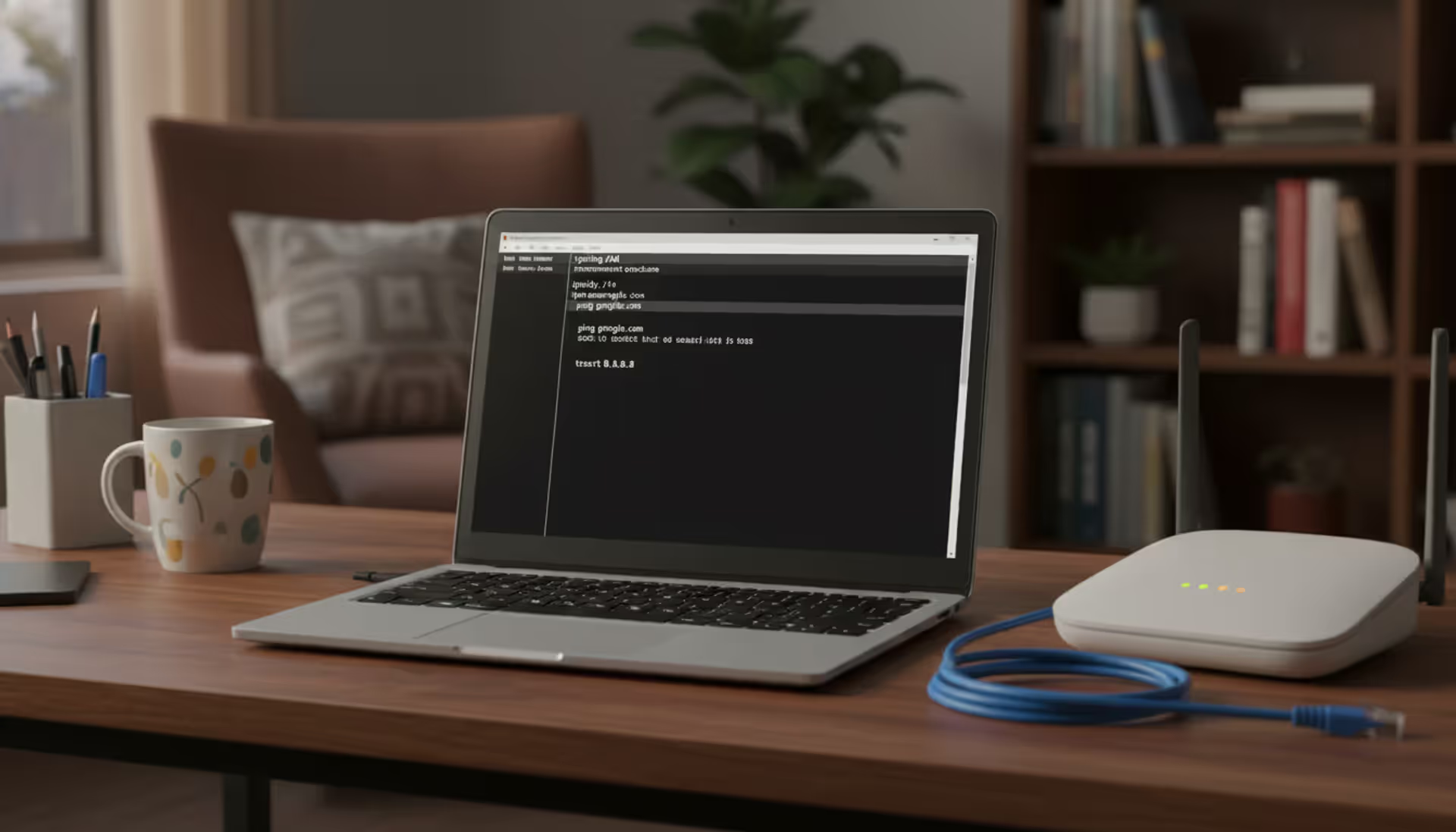
Ever needed to figure out what's actually connected to your home network? Maybe your internet's crawling and you suspect someone's streaming 4K on your Wi-Fi. Or you're setting up a file server and need your PC's exact local address. Whatever the reason, Windows command-line tools let you peek under the hood without downloading sketchy network scanner apps.
I've been troubleshooting networks for years, and honestly? The humble Command Prompt beats fancy GUI tools for speed and precision. Takes about 10 seconds to find your IP, maybe a minute to map your entire home network. Let me show you how.
Finding Your Local IP Address Using Command Prompt
Every device on your network gets an address—think of it like an apartment number in a building. Your router (usually 192.168.1.1 or similar) acts as the building manager, handing out addresses from its pool. These internal addresses differ completely from your public IP that websites see.
Private networks use specific ranges: 192.168.0.0 through 192.168.255.255, 10.0.0.0 through 10.255.255.255, or 172.16.0.0 through 172.31.255.255. If you see anything else (besides the weird 169.254.x.x failure addresses), something's misconfigured.
Windows CMD Commands for IP Address Lookup
Press Win+R, punch in , hit Enter. You'll get that black window. Now here's the magic command:
Boom. Three seconds later, you've got your address. Look for the section matching your connection—"Ethernet adapter" if you're plugged in, "Wireless LAN adapter Wi-...
Read more

The content on this website is provided for general informational and educational purposes related to cloud computing, network infrastructure, and IT solutions. It is not intended to constitute professional technical, engineering, or consulting advice.
All information, tools, and explanations presented on this website are for general reference only. Network environments, system configurations, and business requirements may vary, and results may differ depending on specific use cases and infrastructure.
This website is not responsible for any errors or omissions, or for actions taken based on the information, tools, or technical recommendations presented.